
Reducing Injuries and Strengthening Safe Patient Handling Culture with EZ Way’s In Step Program


Healthcare leaders face a difficult challenge. They must protect caregivers from injury, provide safe
patient care, retain staff, and control costs, all while managing workforce shortages and increasing patient acuity. Many facilities have already invested in safe patient handling equipment. However, equipment alone does not guarantee successful outcomes. Organizations often discover that inconsistent training, poor compliance, inadequate competency validation, or workflow challenges limit the effectiveness of their Safe Patient Handling and Mobility (SPHM) efforts.
The In Step Program was developed to help healthcare organizations evaluate and strengthen their Safe Patient Handling and Mobility programs through a structured approach. Rather than focusing solely on equipment, the program examines processes, training, culture, and operational practices to help facilities create sustainable improvements in patient and caregiver safety.
Common Barriers to SPHM Success
Many facilities encounter similar obstacles when trying to improve safe patient handling practices.
Inconsistent Transfer Techniques
Caregivers often develop workarounds when staffing pressures increase or when training becomes inconsistent over time. These variations can increase risk for both staff and patients.
Equipment Utilization Challenges
Facilities may own appropriate SPHM equipment, yet staff members may not consistently use it.
Common reasons include:
Lack of confidence using equipment
Inconsistent training
Time pressures
Unclear transfer protocols
Access issues leading to reduced compliance
Difficulty Measuring Program Performance
Many healthcare organizations struggle to determine whether their SPHM program achieves desired outcomes. Without a structured evaluation process, leadership may find it difficult to identify:
High-risk units
Training gaps
Equipment needs
Compliance challenges
Opportunities for cost reduction
What Is the In Step Program?
The In Step Program is EZ Way's structured approach to evaluating and improving SPHM programs.
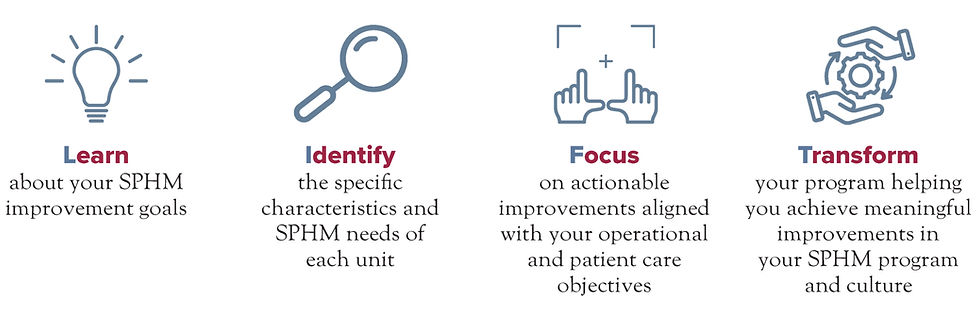
The program follows four key phases (L.I.F.T.):
Learn
The process begins by understanding the organization's SPHM goals. Every facility faces unique challenges. Some may focus on reducing caregiver injuries. Others seek to improve patient safety, increase equipment utilization, strengthen staff retention, or a combination of these. The Learn phase establishes priorities and objectives before recommendations begin.
Identify
The next step evaluates the specific characteristics and SPHM needs of each unit. Different care environments often require different approaches. For example:
ICU may have different transfer demands than rehabilitation units.
Radiology may require unique transfer strategies.
MedSurg may prioritize early mobility initiatives.
Identifying these differences helps create more department specific recommendations.
Focus
Once opportunities have been identified, the program concentrates on actionable improvements that align with operational and patient care objectives. This stage helps organizations prioritize efforts that can deliver meaningful results rather than attempting broad changes all at once. Areas of focus may include:
Staff training
Transfer technique improvement
Equipment utilization
Competency validation
Program compliance
Transform
The final phase helps organizations implement changes that support long-term SPHM improvements and cultural transformation. Sustainable success occurs when safe patient handling becomes part of daily practice rather than a periodic initiative.

How the In Step Program Supports Staff Retention
Retention remains one of the most pressing concerns in healthcare. Caregivers who experience
frequent physical strain or workplace injuries may become more likely to leave an organization.
An effective SPHM program supports retention by helping caregivers:
Perform transfers more safely
Reduce physical demands associated with patient handling
Gain confidence through competency-based training
Feel supported by leadership's commitment to safety
The In Step Program includes customized staff training designed to reinforce proper techniques and SPHM best practices. When staff members understand both the "how" and the "why" behind safe patient handling, organizations often see stronger engagement and compliance.

Improving Patient Safety Through Better Processes
Safe patient handling is not solely about protecting caregivers. Patients also benefit when organizations
establish consistent mobility and transfer practices.
The National Academies of Sciences, Engineering, and Medicine identified workforce stability, care quality, and organizational systems as critical components of improving nursing home care.[i] A structured SPHM program can support patient safety by promoting:
Consistent transfer methods
Appropriate equipment use
Reduced transfer-related risks
Improved resident confidence in SPHM transfers
Better mobility support
Facilities that regularly evaluate practices and reinforce competencies can create a more reliable environment for both residents and staff.

Identifying Hidden Costs
Many organizations focus on the direct costs associated with injuries, but indirect costs can also affect
operational performance. These costs may include:
Overtime expenses
Agency staffing
Training replacement employees
Reduced productivity
Administrative burden
The In Step Program looks to find potential cost savings to help organizations reduce SPHM related expenses and reduce workplace injuries and inefficient patient handling methods.
A Practical Example
Consider a health system experiencing an increase in staff turnover and lifting-related injuries. The hospital already owns lifting equipment but notices inconsistent usage across departments. Through the In Step Program, the organization could:
Evaluate current transfer practices.
Assess equipment utilization patterns.
Identify unit-specific challenges.
Provide competency-based staff training.
Develop an implementation plan tailored to operational goals.
Help management set up follow-up reviews to monitor progress.
Rather than relying on assumptions, leadership gains objective information that supports informed decision-making.

Building a Culture of Safety
Technology and equipment play an important role in SPHM programs, but culture often determines long-
term success. A strong culture of safety encourages:
Consistent equipment use
Ongoing education
Leadership engagement
Accountability
Continuous improvement
The In Step Program specifically includes recommendations aimed at strengthening both SPHM programs and organizational culture. This approach recognizes that sustainable change requires more than equipment purchases. It requires alignment between people, processes, training, and leadership expectations.
Get In Step
Healthcare organizations continue to face pressure from workforce shortages, injury prevention challenges, retention concerns, and financial constraints. SPHM programs can help address many of these issues, but success requires more than equipment alone.
The EZ Way In Step Program provides a structured framework to evaluate current practices, identify improvement opportunities, strengthen staff competency, and support a culture of safety. Through assessment, training, analysis, and implementation planning, healthcare leaders can take practical steps toward reducing injuries, improving patient safety, and enhancing operational performance.
Contact us to learn more about the In Step Program and to discuss your organization’s SPHM goals.
[i] National Academies of Sciences, Engineering, and Medicine, The National Imperative to Improve Nursing Home Quality: Honoring Our Commitment to Residents, Families, and Staff (Washington, DC: National Academies Press, 2022).



Comments