
Why Rollboards Matter in OR and Imaging : Improving Safety and Efficiency in Lateral Transfers

In operating rooms and imaging departments, patient handling is both routine and high risk. Teams are
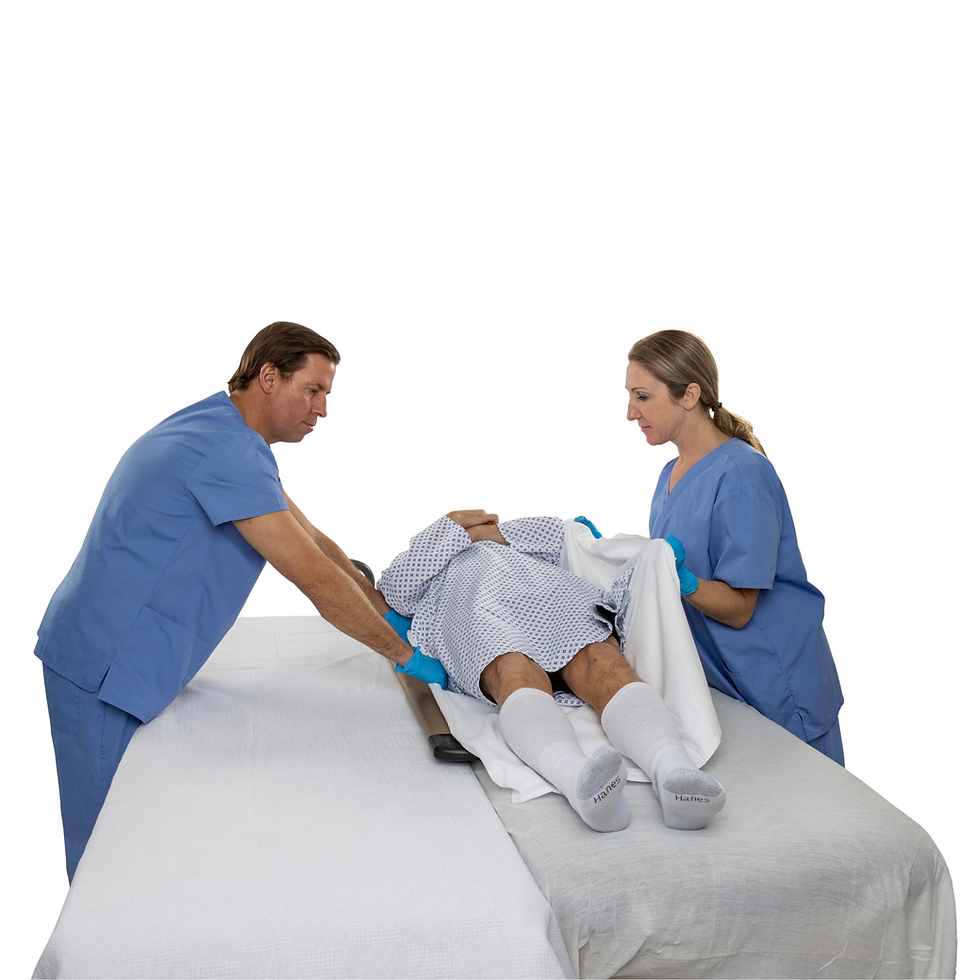
expected to move patients quickly and safely across surfaces (stretchers, surgical tables, and imaging platforms), often in time-sensitive environments with limited staff. At the same time, healthcare organizations continue to face staffing shortages and increasing pressure to reduce workplace injuries.
Rollboards play a critical role in addressing these challenges. When implemented appropriately, they help reduce caregiver strain, support patient comfort, and improve workflow efficiency without adding unnecessary complexity.
The Challenge of Lateral Transfers in Procedural Areas
Lateral transfers are among the most physically demanding tasks for caregivers. In OR and imaging settings, these transfers often involve:
Limited space and equipment constraints
Time-sensitive workflows
Patients under sedation or with limited mobility
The need for precise positioning
Manual handling in these scenarios increases the risk of musculoskeletal injuries, and remains a leading contributor to caregiver injury, reinforcing the need for assistive technologies that reduce physical strain.
At the same time, inefficient transfers can delay procedures, disrupt schedules, and impact patient throughput.
Where Rollboards Fit in Safe Patient Handling
Rollboards are designed specifically to support lateral transfers without lifting. They allow caregivers to

guide patients across surfaces with less physical effort by reducing friction between surfaces.
In the spectrum of lateral transfer solutions, rollboards occupy a practical middle ground:
Require less push-pull force than manual repositioning or basic slide sheets
Less complex than air-assisted systems
This balance makes rollboards particularly well-suited for OR and imaging environments, where speed, reliability, and ease of use are essential.
Key Benefits of Rollboards in OR and Imaging
1. Reduced Caregiver Strain
Rollboards minimize the need for lifting by enabling a smooth, lateral glide. This supports compliance with SPHM protocols and helps reduce the risk of back and shoulder injuries.
Even moderate reductions in force can make a meaningful difference over the course of a shift, especially in departments with high patient volumes.
2. Improved Workflow Efficiency
Time matters in procedural settings. Rollboards can be:
Quickly positioned under the patient
Used without external power sources
Integrated into existing workflows with minimal training
This allows teams to perform transfers efficiently without delaying procedures or relying on additional equipment.
3. Consistent, Controlled Transfers
Rollboards provide a safer, more controlled process than manual transfers. Care teams can guide the patient across surfaces in a predictable manner, which is especially important in:
Surgical positioning
Imaging alignment
Transfers involving anesthesia
4. Patient Comfort and Experience
Patient experience is an important consideration, even during brief transfers. Rollboards help:
Reduce jarring movements
Minimize friction against the skin
Support a smoother, quieter transfer
This is particularly relevant in imaging environments, where noise and discomfort can increase patient anxiety.
5. Versatility Across Departments
Standard Gold Rollboard Birthing Gold Rollboard OR Gold Rollboard Radiology Gold Rollbard EMS Gold Rollboard
Rollboards are commonly used in:
Operating rooms
Radiology and imaging suites
Emergency departments
Labor and delivery
Their portability and ease of use make them a flexible option for facilities looking to standardize lateral transfer practices across multiple departments.
Limitations of Traditional Rollboards
While rollboards offer clear advantages, traditional designs can present challenges:
Weight: Heavier boards can contribute to caregiver fatigue during setup
Hard rollers or rigid surfaces: May impact patient comfort
Cleaning and infection control concerns: Seams and materials can be difficult to disinfect thoroughly
Noise during transfers: Can be disruptive in quieter clinical environments
These limitations have led to the development of newer rollboard technologies designed to better align with modern healthcare needs.
Advancing Lateral Transfer Technology: The Gold Rollboard
The Gold Rollboard represents an evolution in rollboard design, addressing many of the limitations associated with traditional models while maintaining the core benefits of lateral transfer devices.
Lightweight Design for Everyday Use
The Gold Rollboard is designed to be significantly lighter than traditional metal boards (up to 75% lighter), making it easier for staff to position and use throughout the day. This reduction in weight supports caregiver efficiency without compromising durability.
Smooth, Roller-Free Transfers
The Gold Rollboard uses a soft foam core and low-friction surface to facilitate movement, instead of relying on hard rollers. This allows for:
Gentle, controlled transfers
Reduced risk of bruising or skin irritation
Consistent performance across different patient types
Infection Control Considerations
Infection prevention is a priority. The Gold Rollboard incorporates:
Heat-sealed construction with no stitching
Antimicrobial materials in both the cover and core
These features support cleaning protocols and help reduce the risk of contamination.
Quiet Operation for Patient-Centered Care
Rollboards provide a quieter transfer experience compared to air-assisted devices and some slide sheet options. The Gold Rollboard maintains this advantage, helping create a calmer environment for patients, particularly in imaging and pre-operative settings.
Compatibility with Imaging Environments
The non-metal construction of the Gold Rollboard allows it to be used in MRI and other imaging settings, eliminating the need for equipment changes between departments. This supports continuity of care and reduces workflow disruptions.
Use Case: Streamlining Transfers in Radiology

Consider a radiology department performing high volumes of CT and MRI scans. Staff must frequently transfer patients between stretchers and imaging tables, often with limited assistance, particularly during night and weekend shifts.
By incorporating a rollboard:
Transfers can be completed with fewer caregivers
Setup time is minimized compared to air-assisted systems
Patients experience a smoother, quieter transition
When using a solution like the Gold Rollboard, additional benefits include easier handling due to its lightweight design and improved infection control between patients.
Supporting Safer, More Efficient Transfers
For OR and imaging teams, selecting the right lateral transfer solution is about balancing safety, efficiency, and practicality. Rollboards offer a reliable option that aligns with these priorities, particularly in environments where speed and simplicity are essential.
The Gold Rollboard’s improved design builds on this foundation by addressing common challenges related to weight, comfort, and infection control, helping facilities enhance their safe patient handling programs without adding complexity.
A Practical Approach to Safe Patient Handling
As healthcare organizations continue to navigate staffing challenges and increasing demand, optimizing patient handling processes remains a key priority.
Rollboards provide a practical, scalable solution for lateral transfers in OR and imaging settings. By

reducing caregiver strain, improving workflow efficiency, and supporting patient comfort, they play an important role in advancing safe patient handling initiatives. The Gold Rollboard is available in multiple sizes to support a wide range of departments and patient needs, including OR, radiology, bariatric, and EMS applications. With seven models available, facilities can select the appropriate length and width to match specific transfer surfaces and patient populations.
Solutions like the Gold Rollboard demonstrate how thoughtful design can further enhance these benefits, supporting both caregivers and patients alike.
To learn how the Gold Rollboard can support safer, more efficient lateral transfers in your OR or imaging department, contact our team today. We’re happy to answer your questions or schedule a free, no-obligation demonstration tailored to your facility’s needs.


Comments